🚨 France Visa Slots Filling Fast – Secure Your Appointment Today!
🚨 France Visa Slots Filling Fast – Secure Your Appointment Today!
Key Takeaways
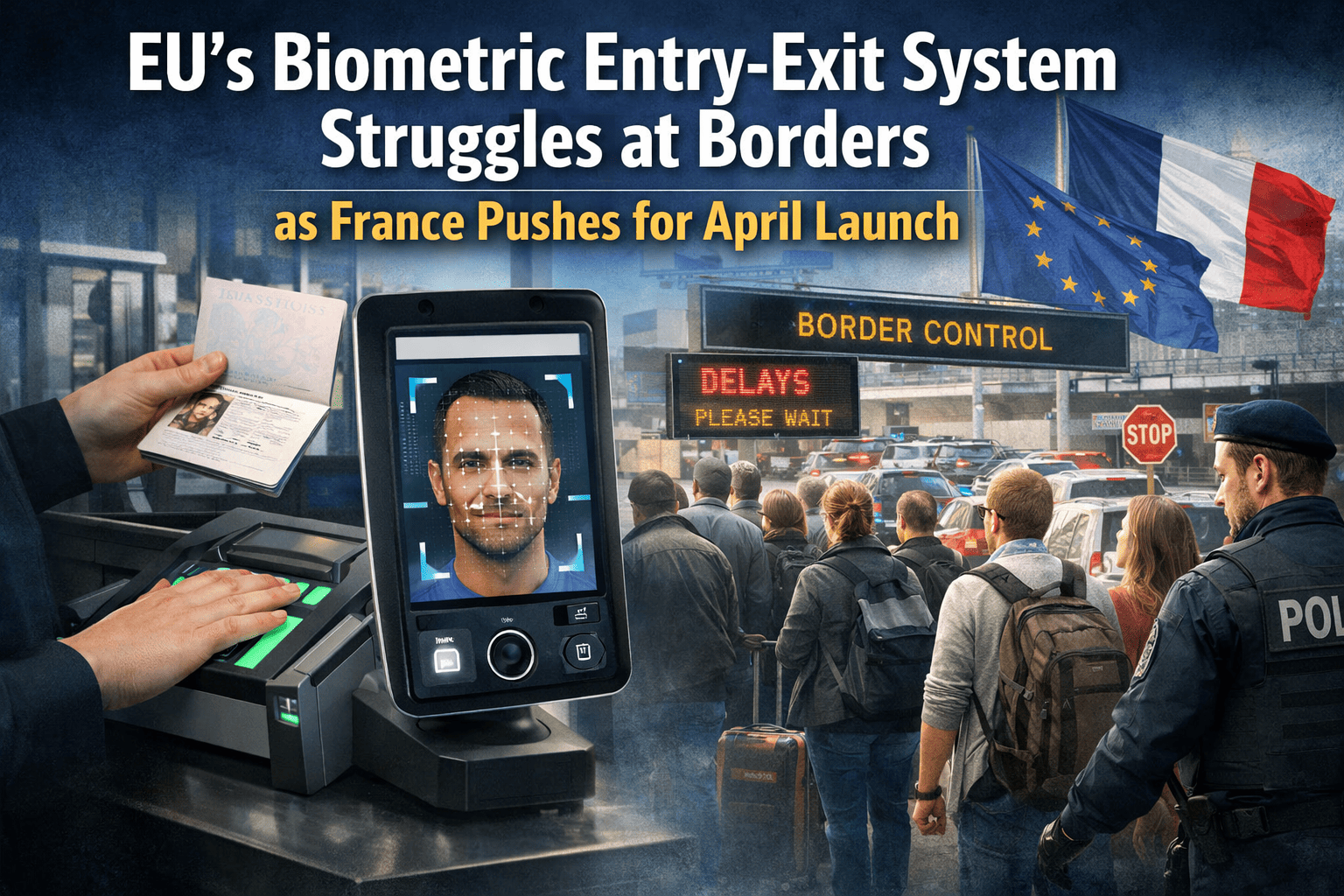
Europe is preparing for a major change in how travellers enter and exit the Schengen Area. The European Union’s Entry-Exit System (EES) — a biometric border control system designed to replace traditional passport stamping — is set for full implementation by April 10, 2026. But its rollout has already encountered significant bottlenecks and practical challenges, especially at France’s busiest airports.
The EES aims to modernise border control by registering biometric data — including fingerprints and facial images — of all non-EU travellers entering and exiting the Schengen zone. According to official rollout plans, the system has been operational in phases since October 12, 2025, with a complete rollout required by April
However, reports show that as of early February 2026, only around 35 % of Schengen external border points have the system actively running. This partial implementation has led to queues stretching up to three hours at major hubs like Paris-Charles-de-Gaulle, Orly, Lyon and Nice airports.
The delays stem from technical setbacks and capacity gaps. Many airports are still installing and fine-tuning biometric kiosks and systems needed to capture traveller data efficiently. Border staff training and technology integration are also lagging, which slows processing times.
Industry bodies such as Airports Council International (ACI) Europe have warned that passenger processing times have increased significantly, with some waits reportedly up to two to three times longer than normal at passport control.
Another issue in France specifically involves the Parafe e-gates, automatic fast-track border gates that were traditionally used by eligible travellers with biometric passports. Technical problems in linking these e-gates with the new EES platform have prevented many, including British and American residents living in France, from using them. As a result, these travellers are directed back to staffed passport lanes, adding to congestion.
At FRANCE VISA UK, our experts assist you in filling your France visa application properly and book your visa appointment with the first available slot.
With the April deadline approaching, French authorities, like other Schengen states, are working to meet the requirement to record biometric data for 100 % of non-EU travellers. But recognising the current system strain, the European Commission has authorised temporary suspensions of the EES for up to 90 days after April 10, with a possible 60-day extension into the high-travel summer months.
This flexibility aims to prevent widespread travel disruption during peak periods — especially as Easter, school holidays and summer travel approach. Airlines, travel companies and border authorities have all urged careful management of staffing and technology to avoid chaos similar to what was seen in the initial phase of the rollout.
For people planning trips to France or anywhere in the Schengen Area, the EES rollout means a new experience at border control. Non-EU visitors — including those from the UK — will have to use biometric kiosks on first entry. After that, their stored biometric data will speed up future checks, but first-time processing may take longer.
Until the system is fully stabilised, travellers should prepare for:
Many travel experts now recommend planning extra time for arrival connections and being patient with border procedures as the new system settles in.
The EES is a part of a larger initiative to modernize Schengen borders, enhance security and increase accuracy in the management of migration. Once it is fully operational it will improve the speed of future entries and exits as well as reduce fraud and make border crossings safer and more efficient.
For now the transition period has proven that large-scale biometric systems need careful planning, proper staffing, along with seamless tech integration lessons that are relevant not just in France but all over Europe.



 447300463745
 02084326004